
What Should I Look for in a Supplement Manufacturer?
A founder’s checklist before you sign a manufacturing agreement
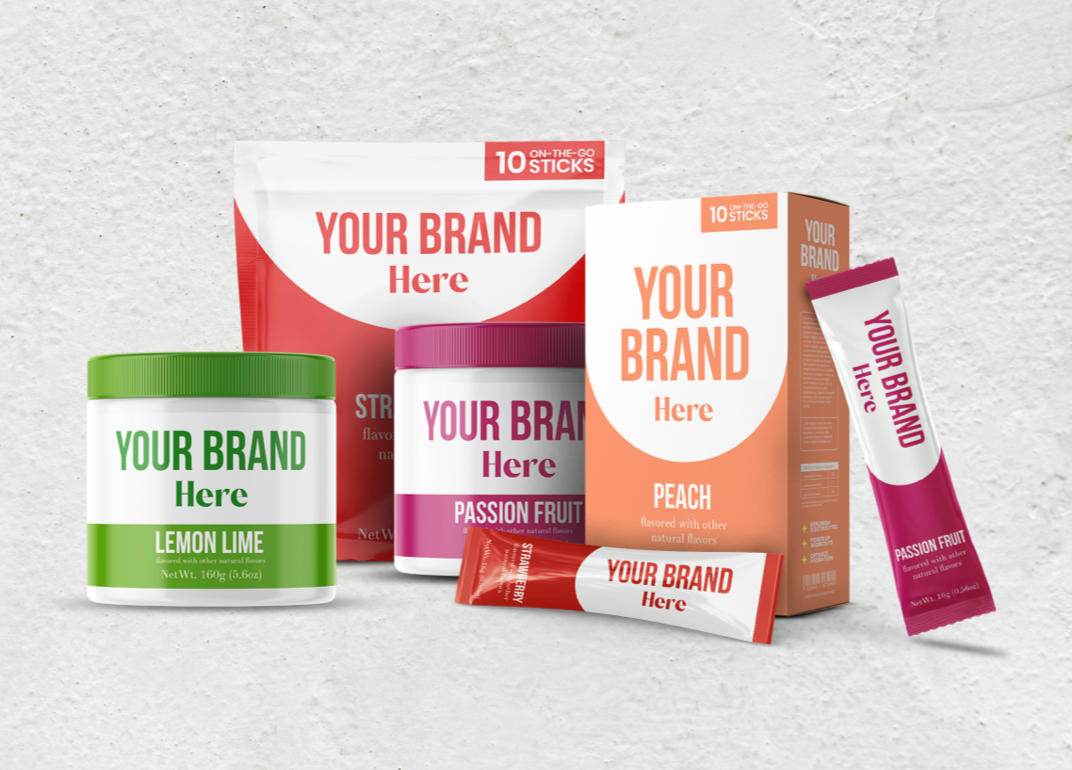
Every founder shopping for a supplement manufacturer starts with the same two questions: “What’s the price per stick?” and “What’s the minimum order?” Those feel like the right place to begin because they’re the easiest things to compare across quotes.
But after working with dozens of brands launching stick-pack supplements, we’ve found that those two data points are among the least predictive of whether a launch actually works. The questions that matter more are harder to ask, because they require you to understand what can go wrong. This guide walks through the evaluation framework we recommend to founders before they sign a manufacturing agreement, organized around the areas where we see the most costly surprises.
Key Takeaways
Start with Scope, Compliance & Quality
Price per stick and MOQ are the two most compared data points, and the two least predictive of a successful launch. Start with scope, compliance, and quality instead.
Find Out What is Included
Ask what is included in every quote. Formulation development, stability testing, packaging, and documentation vary widely between manufacturers.
Understand Who Owns Compliance
The brand owner, not the manufacturer, is the responsible party on the label under FDA regulations. Understand who owns compliance before you sign.
Understand your manufacturers response to problems
A manufacturer’s response to “what happens when a batch fails?” tells you more than their response to “what is your price?”
Understand your areas of potential delay
Packaging and artwork coordination, not manufacturing, is the most common cause of launch delays.
Be Prepared to Walk Away
Walk away from manufacturers who won’t provide a written quality agreement, resist audits, or can’t clearly confirm their FDA registration status.
Why Price Per Stick and MOQ Are the Wrong Starting Point
When you line up three quotes side by side, the manufacturer with the lowest per-unit cost and the smallest minimum order looks like the obvious winner. The problem is that price per stick varies with formulation complexity, raw-material sourcing, packaging format, and run size, so a lower number on paper may reflect a simpler formulation, a cheaper grade of ingredient, or a quote that excludes costs you’ll discover later (tooling, stability testing, certificate of analysis fees, freight).
MOQ tells you how many units you need to commit to, but not what happens when the run comes back wrong, how long changeovers take, or whether the facility can handle your specific dosage form. A manufacturer offering a 10,000-unit MOQ who can’t hold your timeline is more expensive than one requiring 25,000 units who ships on schedule and passes third-party testing on the first attempt.
We covered the real cost structure of launching a supplement brand in detail in What It Really Costs to Launch a Supplement Brand (and the 5 Mistakes That Sink One).
Scope: What Exactly Are You Buying?
The single most important question to ask a prospective manufacturer is: “What is included in this quote, and what is not?”
Manufacturing scope varies enormously. Some manufacturers offer turnkey service: formulation development, raw-material sourcing, blending, filling, packaging, stability testing, and regulatory documentation, all under one roof. Others handle only the physical production and expect you to arrive with a finished formula, pre-qualified ingredients, and your own packaging components.
Neither model is inherently better, but you need to know which one you’re buying before you compare prices. A turnkey quote that looks expensive may actually include formulation development, a stability study, and a certificate of analysis for every batch, while a cheaper quote may exclude all three.
Questions to ask about scope:
- Does the quote include formulation development, or do I need to provide a finished formula?
- Who sources the raw materials, the manufacturer or me?
- Is stability testing included, and if so, what protocol (accelerated, real-time, or both)?
- Does the quote cover packaging, or only the bulk product?
- What documentation ships with each batch (certificate of analysis, certificate of conformance, batch records)?
For founders evaluating stick-pack formats specifically, our formats page breaks down how the packaging format affects both the manufacturing process and the final unit economics.
Compliance Ownership: Whose Name Is on the Label?
In the United States, the brand owner, not the contract manufacturer, is the responsible party on the label under FDA regulations.
That means you bear the regulatory risk for every claim, every ingredient declaration, and every label panel, even though you didn’t manufacture the product yourself. Your manufacturer carries its own obligations for how the product is made, but the label is yours.
A good manufacturer makes compliance easier. A bad one makes it invisible until something goes wrong.
What to look for:
cGMP compliance: Every supplement manufacturer operating in the US is required to follow current Good Manufacturing Practices under 21 CFR Part 111. But “required” and “audited” are different things. Ask when the facility was last inspected by the FDA, and ask to see the most recent FDA Form 483 (the list of observations from that inspection). A facility with zero 483 observations isn’t necessarily better than one with minor observations that were corrected. What matters is whether they take the findings seriously and document corrective actions.
Third-party registration: Many founders ask whether a facility is “NSF certified.” It’s worth understanding what that actually means. NSF International offers several programs: NSF/ANSI 455-2, which covers dietary supplement manufacturing facilities, and NSF Certified for Sport, which covers specific finished products for athletic testing programs. A facility can be registered under one program without being certified under the other. Ask which specific NSF program applies, or whether the facility holds registration through another body entirely.
Label review: Does the manufacturer review your label copy for compliance before printing, or do they print whatever you send? A manufacturer willing to flag a structure/function claim that lacks adequate substantiation is saving you from a warning letter. One that prints whatever you provide is transferring that risk to you silently.
Quality: What Happens When a Run Fails?
Every manufacturer will tell you their quality is excellent. The question that separates the good ones from the rest is: “What happens when a batch does not meet specification?”
Ask specifically:
- Who pays for a failed batch, the manufacturer, the brand, or is it negotiated case by case?
- What is the process for investigating an out-of-spec result? Is there a formal deviation and CAPA (corrective and preventive action) system?
- How are retained samples handled, and for how long?
- Can you audit the facility, and what notice is required?
- What is the average lead time from purchase order to shipment, and what percentage of orders ship within that window?
- The last question matters because a manufacturer who quotes eight weeks but routinely delivers in twelve is not an eight-week manufacturer. Ask for their on-time delivery rate, and ask whether that number is self-reported or tracked by a third party.
- For founders planning a proof-of-concept run, typically in the range of 25,000 to 50,000 stick packs, the risk of a failed batch is proportionally higher because you have less margin to absorb a write-off. Understanding the quality agreement before you commit a purchase order is worth more than any discount on unit price.
If you’re launching into markets beyond the US (Gulf Cooperation Council countries, for instance, require separate registration, Arabic-language labeling, and conformity documentation), ask whether the manufacturer has experience with export-market packaging requirements or whether that coordination falls entirely on you.
Red Flags: When to walk away
Not every manufacturer is the right fit, and some are actively the wrong one. In our experience, these are the signals that a manufacturing relationship is likely to create problems:
No written quality agreement
If the manufacturer is unwilling to put batch-failure terms, deviation procedures, and testing responsibilities in writing before you place a purchase order, the terms will be whatever they decide after the problem occurs.
Resistance to facility audits
A manufacturer who discourages or refuses facility visits, even virtual ones, may have nothing to hide, but the pattern correlates with facilities where documentation practices don’t hold up to scrutiny.
Vague answers on regulatory filings
If you ask whether the facility is registered with the FDA and the answer is anything other than a clear yes with a registration number, slow down. Registration is mandatory for dietary supplement manufacturers, not optional. The registration database isn’t published, so you can’t check it yourself, which is exactly why a manufacturer should be able to hand you the number without hesitation.
No retained samples
Retained samples are the manufacturer’s, and your, insurance policy. If a complaint comes in six months after shipment, a retained sample from that batch is how you investigate. A manufacturer who doesn’t retain samples from every batch is cutting a corner that could cost you a recall.
Questions to Ask Before Signing a Manufacturing Agreement
Use this checklist during your evaluation process:
- What is included in this quote, and what is excluded?
- Who sources the raw materials, you or the manufacturer?
- Is the facility cGMP-compliant under 21 CFR Part 111, and when was it last inspected by the FDA?
- Which specific third-party registrations or certifications does the facility hold?
- What happens financially and procedurally when a batch fails specification?
- What is your on-time delivery rate over the past twelve months?
- Do you review label copy for regulatory compliance before printing?
- What is the proof cycle for packaging artwork, and how many rounds are included?
- Do you retain samples from every batch, and for how long?
- Can I audit the facility, and what notice is required?
Frequently Asked Questions About Choosing a Supplement Manufacturer
What should I look for in a supplement manufacturer?
What is cGMP compliance for supplement manufacturers?
How many units do I need to order for a supplement proof of concept?
Who is responsible for supplement label compliance, the brand or the manufacturer?
What are red flags when choosing a supplement manufacturer?
Working through this list and want a straight answer on your own product?
halo PRIVATE LABEL is a full-service private label manufacturer of premium powdered supplements, including creatine, hydration and electrolyte stick packs, covering formulation and flavor development, packaging, artwork, compliance and destination-market registration, with minimums built for proof-of-concept launches. Send us your idea and we’ll tell you what’s included, what’s not, and what it will actually cost.
Sources & Verification
US FDA dietary supplement current Good Manufacturing Practice requirements: 21 CFR Part 111.
US FDA labeling requirements for dietary supplements: FDA Dietary Supplement Labeling Guide.
NSF dietary supplement certification programs, including the distinction between NSF/ANSI 455-2 facility GMP certification and NSF Certified for Sport finished-product testing: NSF, “Dietary Supplement and Vitamin Certification”.
FTC substantiation standards for dietary supplement advertising claims: FTC, “Health Products Compliance Guidance”.
FDA food facility registration is mandatory but not publicly searchable (owners retrieve their own number through FDA’s FURLS portal): US FDA, Registration of Food Facilities and Other Submissions.
halo PRIVATE LABEL, What It Really Costs to Launch a Supplement Brand (and the 5 Mistakes That Sink One).
halo PRIVATE LABEL, Formats.
Proof-of-concept order sizing (25,000 to 50,000 stick packs) and export-market registration lead times are based on halo PRIVATE LABEL’s own quoting and launch experience, 2025 to 2026, and vary by product, volume, and destination market.